India has the science
India has a strong scientific talent base, established research institutions and promising antibacterial innovations. The challenge is helping these innovations progress from discovery towards development and patient impact.
Call for applications· Open until 31 October 2026
Accelerating Indian anti-infective innovations from lab to patient
A translational and co-development pathway designed to identify and advance promising antibacterial innovations emerging from India.
26 applications across India
Programme partners
Perspective from the Government of India

The India AMR Co-Development Programme is a meaningful step toward supporting the development of India’s antimicrobial innovations. Such collaborative efforts are important in addressing the growing challenge of antimicrobial resistance in the country.
 Prof. Ajay SoodPrincipal Scientific Adviser to the Government of India
Why was the programme created?
India has a strong scientific talent base, established research institutions and promising antibacterial innovations. The challenge is helping these innovations progress from discovery towards development and patient impact.
Promising molecules can stall between discovery and patient impact. I-AMR-CDP bridges development and clinical translation — preclinical, CMC, formulation, clinical, regulatory and manufacturing — to help them progress.
Carried across the bridge, promising Indian antibacterial innovations can reach the patients who need them.
What is I-AMR-CDP?
Five stages. One continuous pathway — designed so that promising Indian antibacterial science does not stall between the lab and the clinic.
Find promising innovations.
Scientific and development assessment.
Preclinical, CMC, formulation and other development activities as appropriate.
Clinical, regulatory and manufacturing development.
Progress viable innovations towards patients.
Destination
Patients
Viable innovations progressing towards the people who need them most.
Who can apply?
The programme is open to Indian innovators working on antibacterial therapeutics — from university labs to early-stage companies.
Indian universities, institutes and research organisations.
Indian companies developing relevant innovations.
Indian scientists and translational research teams.
Teams developing promising antibacterial / anti-infective approaches.
What we’re looking for
Priority pathogen targets · carbapenem-resistant
How does it work?
Until 31 October 2026
Step 01
Initial non-confidential application.
Step 02
Eligibility and programme-fit assessment.
Step 03
Scientific and development review.
Step 04
Shortlisted candidates move into detailed discussions.
Step 05
Selected candidates enter an appropriate project-specific development pathway.
For selected candidates
₹10lakh upfront award
Upon entering a co-development agreement — alongside Venus leading and investing in end-to-end development.
02
End-to-end development investment
Translational studies, preclinical development, CMC, PK/PD, regulatory submissions and clinical studies — as appropriate to the stage of the asset.
03
Direct scientific engagement
With Venus R&D scientists and domain experts across microbiology, PK/PD, toxicology, formulation, analytical, regulatory, clinical, IPR, manufacturing and BD.
04
Advanced R&D infrastructure
Access to Venus laboratories for validation and development work, subject to feasibility and mutual agreement.
05
IP & publication support
Guidance on patent strategy, freedom-to-operate considerations and aligned publication planning.
06
Commercialisation pathway
Venus Remedies leads manufacturing and commercialisation under mutually agreed terms.
IP & confidentiality
All support is governed through appropriate agreements, with no change in IP ownership or rights unless explicitly agreed as part of a formal co-development agreement.
Partner ecosystem
Industry leadership, global clinical research, knowledge and translational expertise, and national ecosystem outreach — connected around one programme.
The programme
I-AMR-CDP
India AMR Co-Development Programme
Initiated & led by

Venus Remedies Limited
Programme Lead & Co-Development Partner
Leads and invests in development, manufacturing and commercialisation.
Scientific & clinical ecosystem

Clinical Research Partner
Global infectious disease clinical trials network — 50+ hospitals, 20 countries.

Knowledge Partner
Not-for-profit created by WHO and DNDi to tackle drug-resistant infections.

Translational Development Advisory Partner
Singapore’s national platform for drug discovery and development.
National outreach
Ecosystem Outreach Partners

National ecosystem outreach through the Office of the Principal Scientific Adviser and its Manthan platform.
What Venus brings
Venus Remedies leads and invests in the development pathway for selected candidates, with project-specific terms agreed with applicants.
A development and commercialisation partner — not a funding programme.
Preclinical pharmacology and toxicology, with microbiology and AMR research in-house.
PK/PD and translational sciences, including the Hollow-Fiber Infection Model.
Process development, CMC, formulation and drug-delivery sciences.
Clinical interface, medical writing and medical affairs.
Regulatory strategy and submissions, backed by quality systems.
India’s largest exporter of critical care antibiotics, including meropenem.
A global presence across 100+ countries.
Perspectives from the AMR ecosystem
Perspective 01 / 04 — Venus Remedies
Venus Remedies is not merely hosting this programme. Venus is committed to developing the innovations that emerge from it.
About Venus Remedies
Venus Remedies Limited is a research-driven Indian pharmaceutical company with a global presence in 100+ countries, focused on complex and life-threatening diseases — particularly in critical care and anti-infectives. The company is widely recognised for its leadership in AMR, supported by sustained investment in advanced R&D, patented therapies and translational science.
Through its dedicated research arm, Venus Medicine Research Centre, it runs a fully integrated R&D ecosystem that bridges the bench to the bedside — including advanced platforms such as the Hollow-Fiber Infection Model and Human Organ-on-a-Chip.
venusremedies.com ↗ (opens in a new tab)Venus leads and invests in the development pathway for selected candidates.
Translational, preclinical, CMC, PK/PD, regulatory and clinical work — as the asset requires.
Production backed by India’s largest exporter of critical care antibiotics.
Taking viable innovations to patients, across a presence in 100+ countries.
Perspective 02 / 04
Clinical Research Partner
The collaboration between ADVANCE-ID and the India AMR Co-Development Programme reflects the importance of integrating clinical development perspectives early in the translational pathway of antibacterial innovation. Such partnerships can play an important role in strengthening the development of clinically relevant AMR solutions.

Prof. David Paterson
Director, ADVANCE-ID
About ADVANCE-ID
The ADVANCE-ID Network (Advancing Clinical Evidence in Infectious Diseases) is a global infectious disease clinical trials network headquartered at the National University of Singapore — over 50 hospitals across 20 countries conducting high-quality clinical research, with a strong localised footprint across Asia, including India.
For I-AMR-CDP, ADVANCE-ID brings clinical development perspectives into the translational pathway early.
Perspective 03 / 04
Knowledge Partner
Addressing antimicrobial resistance requires collaboration across the healthcare ecosystem. We are pleased to support India AMR Co-Development Programme as a Knowledge Partner and contribute scientific, strategic, and global AMR perspectives to the programme. Initiatives such as this help foster collaboration and strengthen efforts to address the growing challenge of AMR through innovation and partnership.

Karan Prabhakar
Head of Product Delivery & India Office, GARDP
About GARDP
GARDP (Global Antibiotic Research and Development Partnership) is a not-for-profit organisation created by the World Health Organization (WHO) and the Drugs for Neglected Diseases initiative (DNDi). Its mission is to protect people from the rise and spread of drug-resistant infections — work made possible by collaboration with over 100 R&D and access partners in over 20 countries.
As Knowledge Partner, GARDP contributes scientific, strategic and global AMR perspectives to the programme.
Perspective 04 / 04
Translational Development Advisory Partner
EDDC is honoured to serve as the Translational Development Advisory Partner for the India AMR Co-development Programme (I-AMR-CDP), bridging scientific innovation and translational development to help bring much-needed AMR solutions closer to patients.

Dr. Kantharaj Ethirajulu
Director, Asset Development, EDDC
About EDDC
The Experimental Drug Development Centre (EDDC) is Singapore’s national platform for drug discovery and development. Formed in 2019 from three publicly funded entities, it integrates small and large molecule discovery, preclinical development, CMC, and regulatory and clinical development capabilities to translate innovative discoveries into impactful treatments.
As Translational Development Advisory Partner, EDDC offers advisory perspective on translational development.
Programme founders

For decades, Venus has taken anti-infectives from the laboratory to patients around the world. Through I-AMR-CDP, we are committing that same capability to India’s innovators — investing in development, manufacturing and commercialisation, so that promising science does not stop at discovery.
Mr. Saransh Chaudhary
Executive Director, Venus Remedies Limited
CEO, Venus Medicine Research Centre

India has a strong scientific talent base and a growing pipeline of promising anti-infective innovations. I-AMR-CDP is designed to create the translational pathway needed to take these innovations beyond discovery and towards clinical and patient impact.
Anmol Aggarwal
Programme Lead, I-AMR-CDP
R&D Strategy, Venus Remedies Limited
anmolaggarwal@venusremedies.comThought leadership
Leaders across Indian science, public health, infection control and global AMR R&D on why translation matters now.

Antibiotics are indispensable, life saving drugs that form the bedrock of modern medicine. But their efficacy is compromised by antimicrobial resistance (AMR). Investment in R&D for novel antibiotics is an urgent and pressing need. The India AMR Co-Development Programme is a significant step in this direction.
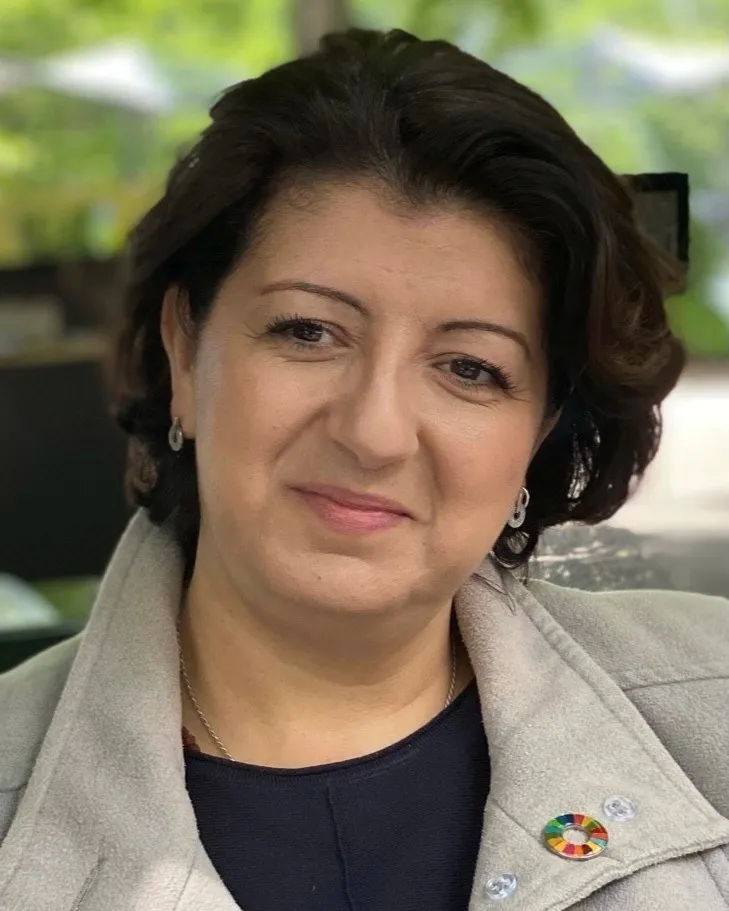
Overcoming AMR requires more than scientific breakthroughs; it requires an ecosystem that enables innovation to flourish. By fostering collaboration between academia, industry, funders, and health systems, initiatives such as the India AMR Co-Development Programme can accelerate the development of new antimicrobial solutions and help ensure they reach those most affected by drug-resistant infections.

A core challenge in AMR is ensuring that promising antibacterial research can progress toward practical use. Strong innovation ecosystems are central to this, creating the connections and capabilities needed for sustained development. Programmes like the India AMR Co-Development Programme help reinforce these conditions and support a more enabling environment for antimicrobial innovation.

The AMR race is often described as a contest between humans and microbes. It is not. It is a race between the speed of evolution and the speed of innovation. Unless we build ecosystems that innovate as rapidly as resistance evolves, we will always be responding to yesterday’s threat.
Initiatives like the India AMR Co-Development Programme are critical to bridging the gap between discovery and impact by creating a seamless pathway from innovation to validation, adoption and scale. Encouraging such collaborative platforms will ensure that the next breakthrough reaches patients before the next resistant pathogen does.

The fight against AMR will be won through collaboration that transforms scientific discovery into public health impact. By fostering a strong translational ecosystem, the India AMR Co-Development Programme can accelerate Indian innovations from the laboratory to the patient’s bedside, strengthening India’s leadership in developing affordable antimicrobial solutions for the Global South and beyond.

Antimicrobial resistance (AMR) is a complex challenge that can only be effectively tackled through collaboration among all stakeholders. One of the most important solutions is the development of new antibacterial therapies. The India AMR Co-Development Programme (I-AMR-CDP) is an excellent initiative that will strengthen India’s antibacterial innovation ecosystem by helping translate promising research into therapies that can benefit patients.

Innovation is key to tackling the challenges facing the world. Mitigating the AMR challenge through innovation therefore is paramount if we are to sustain life as we know it. Let’s do our part through collaborative innovation, not just for ourselves, but for the generations to come!
Already moving
AMR innovation is emerging across India.
Every application represents a team working to address an important challenge in antimicrobial resistance.
Map: DataMeet India, CC BY 4.0 · Applicant locations, city level
Programme updates
Partnerships and milestones since the call for applications opened.
Applications reached the open call from across the country within just a few weeks.
Singapore’s national platform for drug discovery and development joins the programme.
Contributing scientific, strategic and global AMR perspectives to the programme.
A global infectious disease clinical trials network of 50+ hospitals across 20 countries.
Apply to I-AMR-CDP
Developing a promising antibacterial or anti-infective innovation in India?
Applications open until 31 October 2026 · Non-confidential, non-binding